


a commodity trade turned into a category leader.

George Albantov, owner of Mr. Fridge

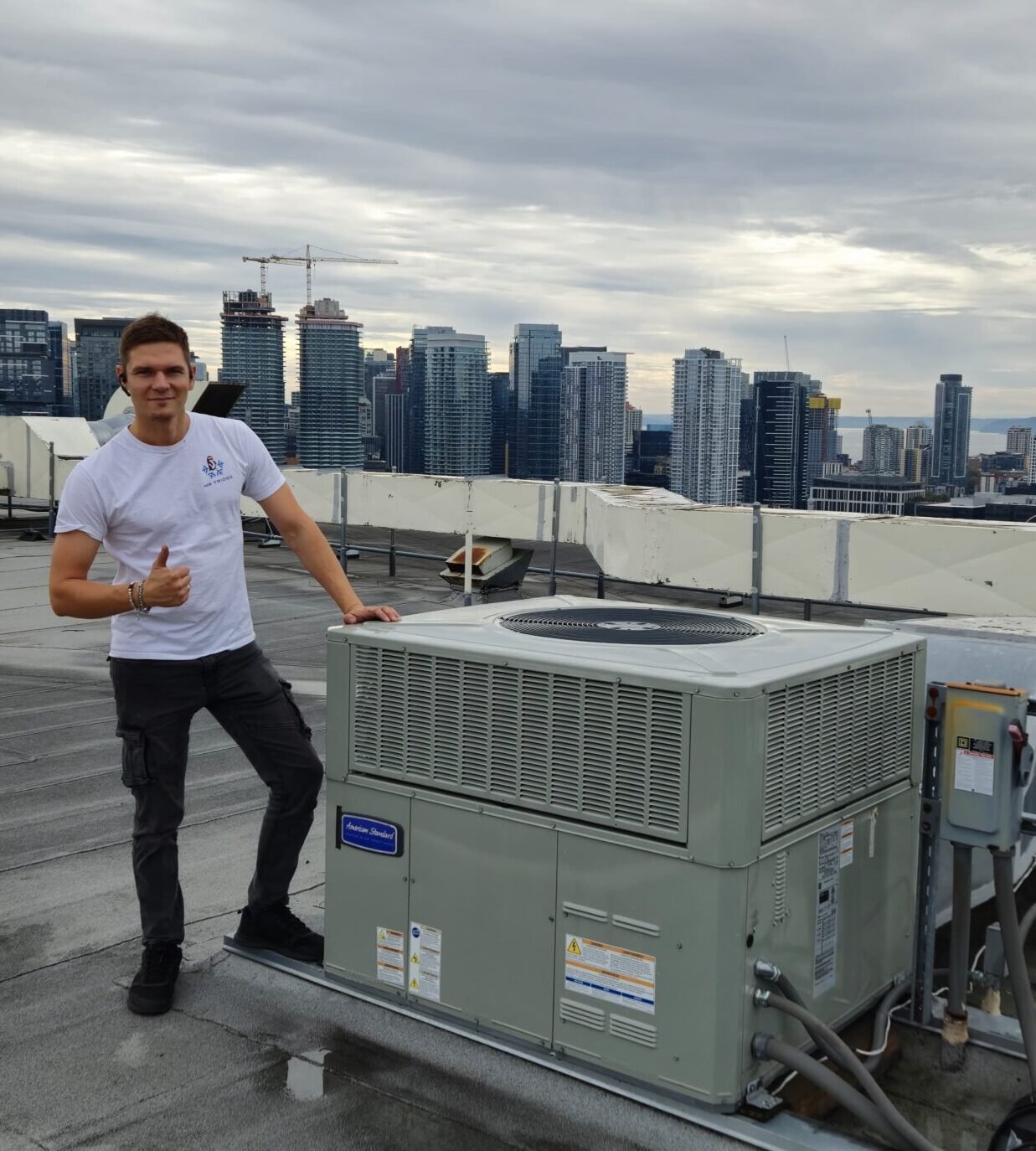
Meet George Albantov

George runs Mr. Fridge out of Seattle. When we met in 2023 the business was appliance repair, which is a category with no shortage of competent operators and no easy way for any of them to stand out.

The work was good. The problem was that a property manager searching for help had no reason to pick Mr. Fridge over the dozen other names on the page, and nothing online explained why they should.

The starting point

Two men, a van, and a steady stream of low-value appliance calls. The work was good and the economics were not.

  • Competing in consumer appliance repair, the most crowded and lowest-margin segment
  • Cheap tickets from price-shopping customers, with no repeat value
  • A website that described services but did not convert
  • No brand distinct from any other repair company
  • No tracking tying calls back to what produced them
  • Commercial refrigeration searches going to competitors

How it unfolded

Three years, one phase at a time. The category shift in phase three is the part that changed the company.

01

Build the site first

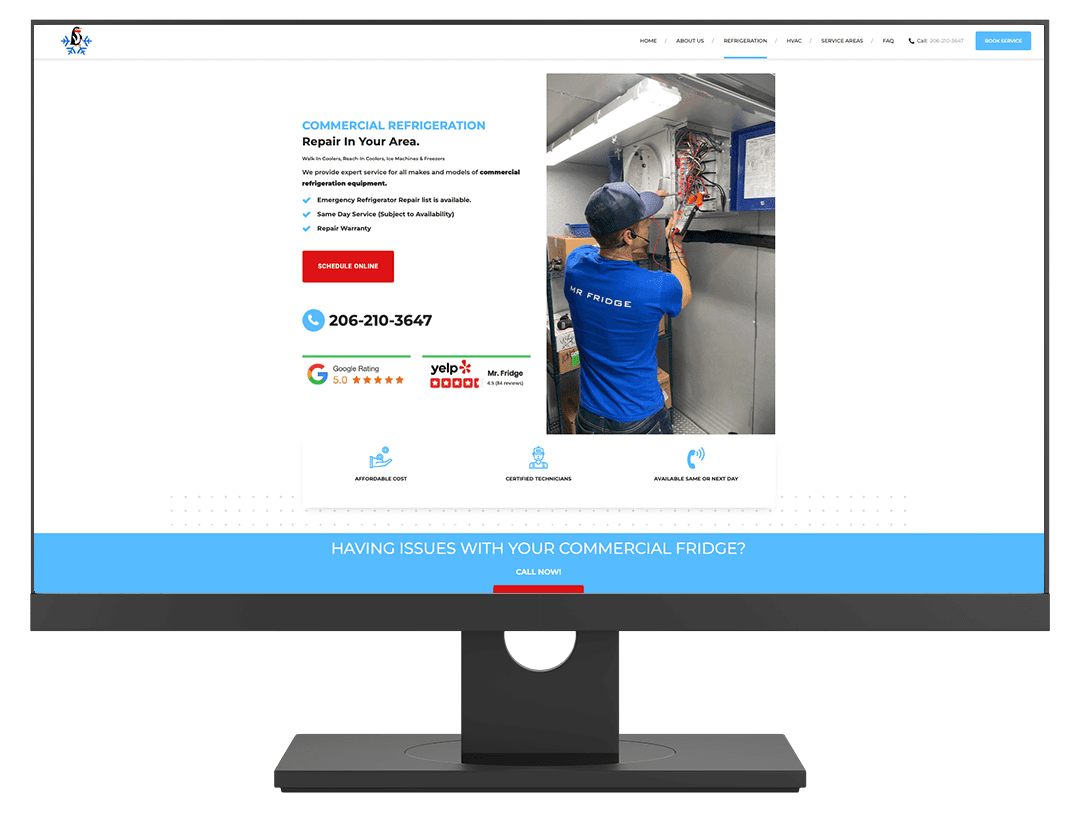
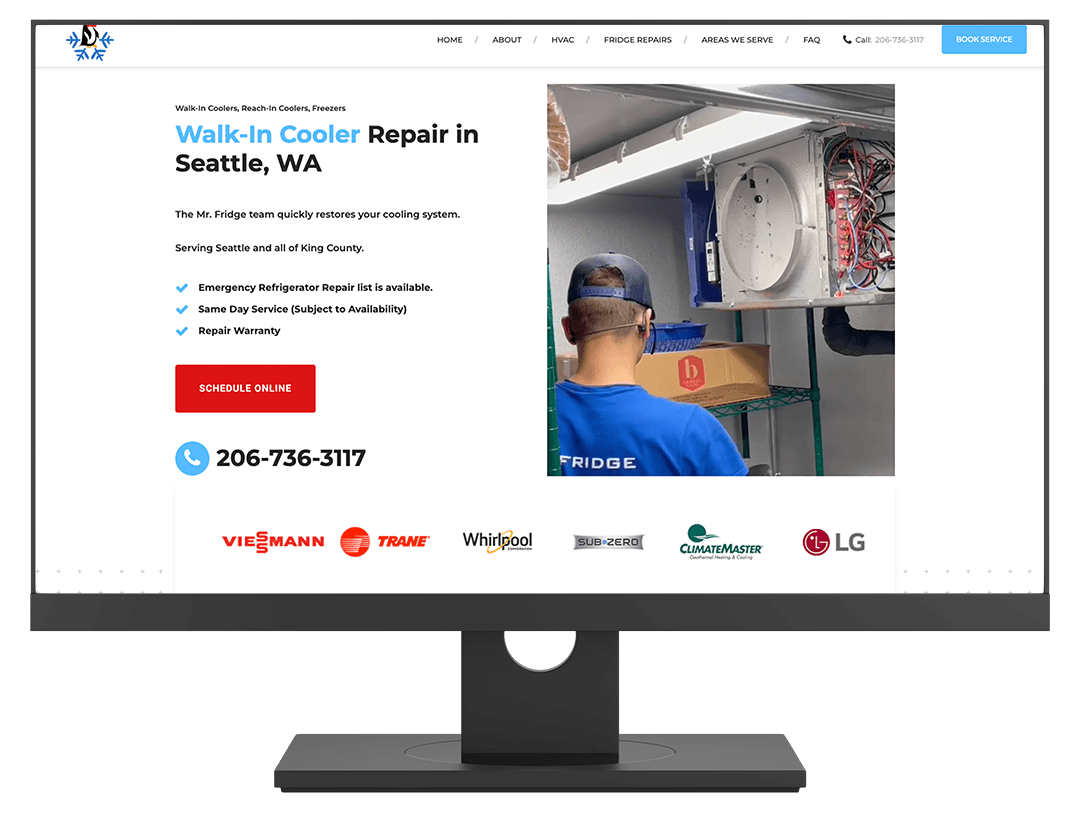
Everything we planned would pour through the website, so it went first. A conversion-built site, a mascot, and an identity that made a commodity trade memorable in a category where nobody bothers. Call and form tracking from day one, because the whole strategy depended on being able to see which jobs came from where.

02

Turn on paid search

Google Ads once there was somewhere worth sending traffic, layered with Yelp and the other places these searches start. Within weeks the tracking was showing something uncomfortable: plenty of calls, most of them worth almost nothing.

03

Read what the tickets were actually worth

Residential appliance repair converted fine and paid badly. A fridge in a kitchen is a small ticket, a price-shopping customer, and a competitor on every corner. Commercial jobs were several times the value and contested by a fraction of the competition. The volume metric said one thing and the revenue said another.

04

Move the whole business to commercial

This was the decision that changed the company. We pointed SEO, ads, content, and the brand at commercial refrigeration and stopped chasing consumer appliance work entirely. Fewer leads on paper, far more revenue behind them, and a business that could finally schedule its week around planned work instead of reacting to whatever called in.

05

Chase the installation work, not just repairs

Repair calls pay the bills; walk-in cooler and freezer installation is where the real tickets are. We built dedicated installation pages, targeted the planning-stage searches that happen weeks before a build, and put Mr. Fridge in front of contractors and operators speccing new kitchens. Those jobs are worth many times a service call and they arrive scheduled rather than as an emergency.

06

Own the category, then repeat it

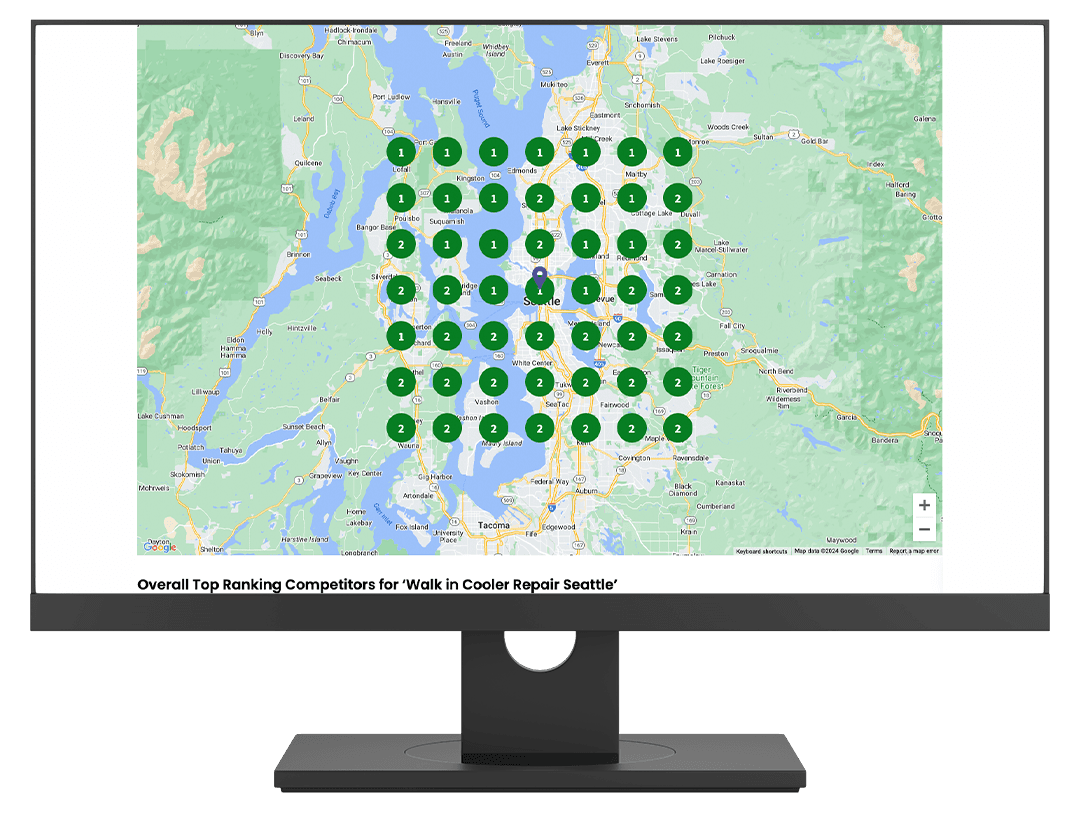
Service and city pages across the Seattle metro until Mr. Fridge held the top positions for commercial fridge and walk-in repair, dispatching from Seattle, Shoreline, and Puyallup. Once the model was proven we ran the same structure into Austin, then Vancouver BC, and kept it compounding with ongoing content, technical SEO, and schema so the position holds when spend pauses.

Results

1.8% to 21.7%

conversion rate on the rebuilt site

2 to 15+

staff as the business grew

1 to 5

markets, Seattle to Vancouver BC

9x

return on investment

The conversion rate is the number worth pausing on. Moving from 1.8 percent to 21.7 percent means the same traffic produces roughly twelve times the work before a single extra dollar of spend. But the number that actually built the company was the one we stopped chasing: total lead volume went down when we cut consumer appliance work, and revenue per job went up enough to carry a team from two people to more than fifteen across five markets.

What comes next

Austin was the test of whether any of this was repeatable or whether Seattle had just been a good market at a good time. New site, correctly structured from day one, SEO aligned to it before launch rather than bolted on after. Mr. Fridge now sits at number one in the Austin metro map pack and number one in organic results across the key commercial refrigeration terms, in a market where it had no history and no reviews.

Seattle is the harder problem now. Competitors have watched what worked and started copying it, building out the same service and city page structures and chasing the same terms. The position we built is being attacked by people using our own playbook, which is a compliment and a threat in equal measure. Holding it takes ongoing technical work, content, and campaign management rather than the one-time push that won it.

The goal has not changed since 2023: be the company commercial property managers and restaurant operators call first. In Seattle that is already true, and the work now is keeping it that way.

Kirill Volkov

Founder, Fabrika

We stopped chasing cheap appliance calls and pointed everything at commercial refrigeration. Fewer leads, far more revenue, and a business that could finally plan its week.

How Mr. Fridge traded cheap appliance calls for the commercial refrigeration market

How three years of work moved a two-man Seattle repair outfit out of cheap appliance tickets and into the commercial refrigeration category it now leads across five markets.

Mr. Fridge commercial refrigeration branding and website work by Fabrika

Mr. Fridge

client
Mr. Fridge
industry
Commercial refrigeration
duration
2023 to present
scope
Web Design
SEO
Google Ads
Branding

From one more repair company to the obvious call

When George brought us in during 2023, Mr. Fridge was a competent appliance repair company in a market full of competent appliance repair companies. The work was good. The problem was that nothing online said so, and nothing separated them from the dozens of other names a property manager could call instead.

We started with the website, because everything else pours through it. A conversion-built site, a mascot, and a graphic identity that made a commodity trade memorable. Then Google Ads, layered with Yelp and the other places these searches actually happen.

The real decision came later. The data kept pointing at commercial work: higher value, less price shopping, fewer competitors bidding for the search. So we pushed SEO hard at commercial refrigeration queries across the Seattle metro, and the business followed the demand until it had repositioned around commercial repair and installation entirely.

Traffic grew roughly 30 percent quarter over quarter, past 74,000 quarterly visits. Conversion rate moved from 1.8 percent to 21.7 percent, about a ninefold return on what went in. The program now runs in Austin as well.

more work

Cart (0 items)